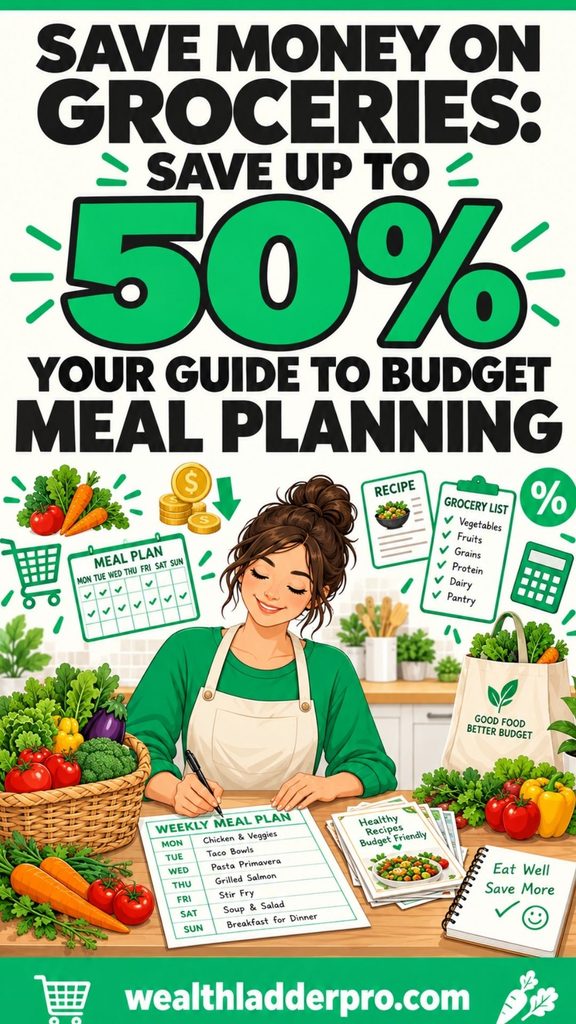
Save Money on Groceries: Your Guide to Budget Meal Planning
Save money on groceries by planning meals a week in advance, shopping with a list built around sales and seasonal produce, batch cooking versatile proteins, and tracking spending weekly.
Combining budget meal planning with eating out less can cut monthly food costs by hundreds of dollars, even as grocery prices continue to climb.
Food costs are now 34% above pre-pandemic levels, according to the U.S. Bureau of Labor Statistics.
That single number explains why grocery runs feel more painful than they used to, and why so many households are searching for ways to save money on groceries without giving up the meals they enjoy.
There’s a daily tug-of-war behind every food decision. Cooking at home takes more effort.
Ordering takeout takes thirty seconds and a few taps. But that convenience compounds fast, turning what feels like a harmless treat into one of the largest line items in a monthly budget.
The good news: you don’t need to overhaul your entire lifestyle to see results.
Budget meal planning, smarter shopping habits, and a few simple tracking tools can meaningfully lower your food spending within a single week.
This guide walks through exactly how to do it, from planning your meals to knowing when a meal kit subscription might actually save you money.
How much does eating out actually cost compared to cooking at home?
The gap between dining out and cooking at home is larger than most people realize.
According to a breakdown from Canyon News, $25 worth of groceries can cover lunch and dinner for four to five days, while eating out typically runs $15 to $20 per meal, per day.
Multiply that across a month, and restaurant meals cost several times more than home-cooked ones for the same number of meals.
What hidden costs make dining out more expensive than it looks?
The bill itself is only part of the story. Tips typically add 15-20% on top of the check.
Service charges are increasingly common at restaurants trying to offset their own rising costs.
And once you’re seated, impulse ordering—an appetizer here, a dessert there, a second round of drinks—quietly inflates the total well beyond what you planned to spend.
There’s a health dimension too. Restaurant meals tend to run higher in calories, sodium, and unhealthy fats than meals prepared at home, since portion sizes and ingredient choices are largely out of your control.
Eating out less doesn’t just protect your bank account; it gives you more say over what actually ends up on your plate.
Why is budget meal planning the most effective way to save money on groceries?
Budget meal planning works because it removes decision fatigue from the equation.
When you know exactly what you’re cooking on Tuesday night, you’re far less likely to order delivery out of sheer exhaustion at 6 p.m.
Start by mapping out your meals for the week before you shop. Build your grocery list around that plan, and buy only what you need for those specific meals.
This single habit prevents two of the biggest budget killers: impulse purchases at the store and food waste from ingredients that never got used.
How can batch cooking stretch your grocery budget further?
Batch cooking multiplies the value of every grocery dollar. Take chicken breast as an example: buy it in bulk, cook a large batch at once, and portion it across multiple meals throughout the week.
One cooking session becomes five lunches or dinners, cutting both your prep time and your per-meal cost.
This same principle extends to packing lunches for work. If you’ve already batch-cooked your meals, packing a lunch takes minutes instead of requiring a separate decision (and a separate expense) each day.
What are the best grocery budgeting tips for lowering your weekly bill?
Beyond planning your meals, how you shop matters just as much as what you buy.
A few grocery budgeting tips can meaningfully reduce your weekly bill without sacrificing the quality of what’s in your cart:
- Buy non-perishables in bulk. Rice, pasta, canned goods, and other shelf-stable staples are typically cheaper per unit when purchased in larger quantities.
- Use loyalty programs and digital coupons. Most major grocery chains offer free loyalty programs, and manufacturer discounts can be stacked with store promotions for additional savings.
- Choose store-brand products. Generic and store-brand items are frequently produced in the same facilities as name brands, offering comparable quality at a noticeably lower price.
- Shop seasonal produce. Fruits and vegetables in season are both fresher and cheaper, since they don’t require the added cost of long-distance shipping or extended storage.
None of these tips require dramatic sacrifice. Layered together, they add up to a meaningfully lower total at checkout, week after week.
Also Read: Swipe Less, Save More: How to Stop Impulse Buying for Good
How do basic cooking skills save you money long-term?
The more comfortable you are in the kitchen, the less tempting takeout becomes.
Building basic cooking skills is one of the most underrated ways to cut food costs over time, because confidence in the kitchen removes the “it’s just easier to order in” excuse.
Start with a versatile, affordable protein like chicken, which can be grilled, roasted, shredded, or stir-fried into a different meal each time.
Preparing the same base ingredient multiple ways prevents meal fatigue while keeping your grocery list simple and repeatable.
If you’re just starting out, free resources make this easier than ever. YouTube tutorials, beginner-friendly cookbooks, and even local cooking classes can teach foundational techniques quickly, without requiring a culinary degree or an expensive equipment upgrade.
Are meal kit services or CSA boxes worth it for budget-conscious shoppers?
Meal prep delivery services and Community-Supported Agriculture (CSA) boxes occupy a useful middle ground between cooking from scratch and eating out.
They deliver pre-portioned ingredients or fresh, local produce directly to your door, cutting down on both planning time and impulse grocery trips.
The cost comparison matters here: while meal kits and CSA boxes typically cost more per meal than a fully planned grocery shop, they’re still generally cheaper than the $15-$20 per meal average of eating out.
For households that are still building their meal-planning habits, these services can offer a practical bridge, supporting the same savings goals without requiring you to master a shopping list from day one.
What’s the best way to track food spending and stick to a budget?
None of these strategies work long-term without visibility into where your money is actually going.
Start by setting a realistic weekly food budget based on your income and other expenses.
From there, apps like YNAB, GoodBudget, and MyBudgetCoach can automatically track your grocery and dining spending, giving you a clear picture without manual spreadsheets.
Review that spending weekly rather than waiting until the end of the month.
A quick check-in helps you catch patterns early, whether that’s a string of takeout orders during a busy week or groceries that went unused and ended up in the trash.
If you go over budget one week, adjust rather than abandon the plan entirely.
A single setback doesn’t undo the savings from every week before it.
Budget meal planning is a habit built over months, not a test you either pass or fail.
Also Read: Stop the Cash Drain: 9 Smart Ways to Cut Monthly Expenses
Start Saving on Food Today
Lowering your food costs comes down to a handful of consistent habits: plan your meals, shop with intention, cook more often than you order in, and track your spending so you know what’s working. None of these changes require perfection.
Small, consistent adjustments compound into real savings over a matter of months, especially with food prices sitting well above where they were just a few years ago.
Rather than trying to implement everything at once, pick one or two strategies from this list to start this week.
Maybe that’s building your first meal plan, or maybe it’s simply downloading a budgeting app to see where your money actually goes. Once one habit feels natural, add the next.
Ready to put this into action? Download our free weekly meal planner and budget template to start your first week of budget meal planning today, and subscribe to our newsletter for more practical tips on cutting food costs.
How to Save Money on Food and Eat Healthy
Cutting costs while dining out starts with smart choices. Look for deals like happy hours or special promotions, and consider splitting larger portions with a friend.
Prioritize restaurants offering loyalty programs or discounts for repeat visits. Cooking at home more often and saving eating out for special occasions also adds up quickly.
When you do go out, drink water instead of ordering expensive beverages, and skip the extras like appetizers to keep the bill manageable.
Small, conscious decisions can make dining out enjoyable without breaking the bank.
How to Save Money on Groceries and Eat Healthy
Start by planning meals for the week and making a shopping list to stick to it, avoiding impulse buys.
Choose seasonal fruits and vegetables, as they’re often cheaper and fresher. Buy in bulk for staples like rice or beans, and consider frozen produce for longer storage without waste.
Look for store brands instead of big-name labels for the same quality at a lower price.
Cooking in batches and freezing portions saves time and reduces waste, while homemade snacks or meals help cut down on the temptation to grab costly prepackaged options.
Staying mindful of deals and coupons can make healthy eating affordable and efficient.
Also Read: Grocery Bill Giving You Sticker Shock? Save Big Without Eating Less
Why Eating Out Is a Waste of Money
Eating out often drains your wallet faster than you realize. Restaurants add costs for service, tips, and markups on every dish, making meals significantly pricier compared to cooking at home.
Plus, impulse spending on drinks or desserts can quickly add up. By sticking to homemade meals, using groceries wisely, and planning ahead, you gain more control over your budget while still enjoying delicious food.
Think of each meal you skip dining out as money saved toward something truly important.
How to Save Money Eating Out on Vacation
When you’re on vacation, saving money on food starts with a little planning. Look for local markets or grocery stores to stock up on snacks or quick breakfasts, so you’re not eating out for every meal.
Choose restaurants thoughtfully—lunchtime menus are often cheaper than dinner, and many spots offer specials or discounts during certain hours.
Sharing dishes is another great way to cut costs while still sampling local cuisine. If your accommodation includes a kitchenette, cooking simple meals can save you big.
Finally, avoid tourist traps by exploring where locals eat—these hidden gems often have better prices and authentic flavors.
Frequently Asked Questions
How much should I budget for groceries per week?
A reasonable starting point is $50-$75 per person per week, though this varies based on household size, location, and dietary needs.
Track your actual spending for two to three weeks first, then use that baseline to set a realistic budget you can stick to.
What’s the cheapest way to meal prep?
Batch cooking an affordable, versatile protein like chicken alongside bulk-purchased grains and seasonal vegetables is typically the cheapest approach.
Preparing large quantities in a single cooking session reduces both ingredient costs and time spent cooking throughout the week.
How can I stop overspending on takeout?
Budget meal planning is the most direct fix, since having a meal already planned removes the “too tired to cook” excuse that drives most takeout orders.
Packing lunches in advance and keeping quick, go-to recipes on hand for busy nights also reduces the temptation to order in.
Are meal kit subscriptions actually cheaper than eating out?
Generally, yes.
While meal kits cost more per meal than a fully planned grocery shop, they’re typically less expensive than the $15-$20 per meal average for restaurant dining, making them a reasonable middle-ground option for those still building their cooking habits.
Is it better to buy store-brand groceries to save money?
In most cases, yes.
Store-brand products are often manufactured in the same facilities as name-brand items, offering comparable quality and taste at a lower price point, which makes them one of the easiest ways to reduce your grocery bill without changing what you eat.