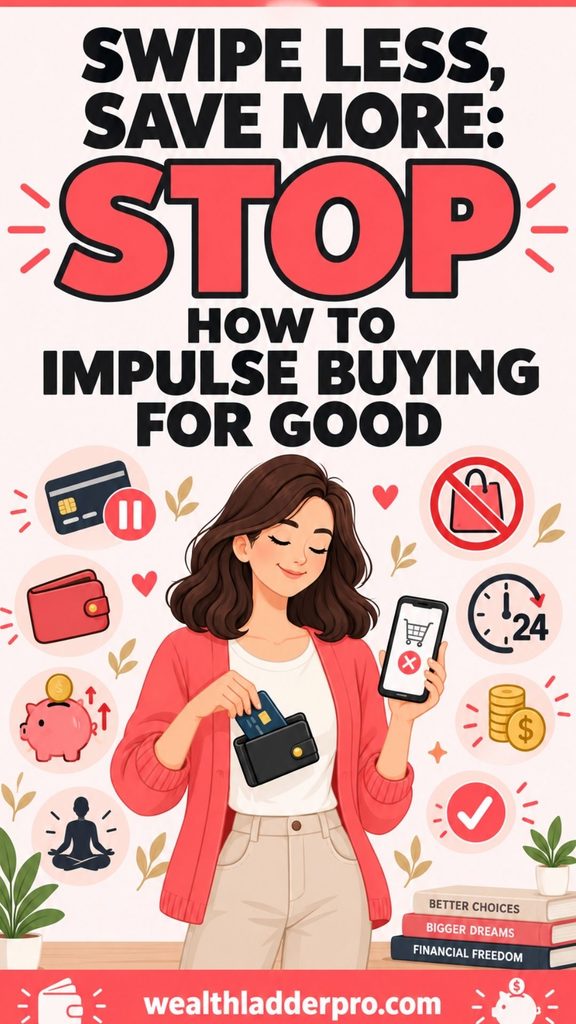
Swipe Less, Save More: How to Stop Impulse Buying for Good
To stop impulse buying, add a mandatory 24-hour pause before non-essential purchases, automate savings before discretionary spending happens, and reduce exposure to shopping triggers like retailer emails and social media ads.
Building financial discipline also means tracking spending patterns, choosing cash over cards for discretionary categories, and replacing emotional shopping urges with low-cost alternatives.
Your phone buzzes with a “flash sale ends in one hour” notification. Or maybe it’s just been a long day, and scrolling turns into browsing, which turns into a cart full of things you didn’t know you needed twenty minutes ago. Sound familiar? You’re far from alone.
According to Invesp, 84% of shoppers have made an impulse purchase, and impulse buys now account for nearly 40% of all online spending.
This isn’t a rare lapse in judgment — it’s a widespread, almost default mode of shopping in the digital age.
And the cost adds up fast: Capital One Shopping found that the average consumer spent an estimated $3,045 on impulse buys in 2025 alone. That’s money that could have gone toward an emergency fund, a vacation, or retirement.
If you’ve ever wondered why that “add to cart” button feels so hard to resist, or how to finally break the cycle, this post breaks down the psychology behind impulse buying and offers eight practical, research-backed strategies to help you build financial discipline and start saving more money today.
Why Do We Impulse Buy? The Psychology Behind the Urge
Impulse buying isn’t simply a lack of willpower. It’s rooted in brain chemistry.
When you see something desirable — a limited-time deal, a beautifully staged product photo, a “must-have” item your favorite influencer just posted — your brain releases dopamine, the neurotransmitter associated with pleasure and reward.
Research on impulsive decision-making has consistently linked heightened dopamine activity to a reduced ability to pause and evaluate a purchase before acting on it. In other words, the “buy now” urge often wins the race against your rational brain.
Emotional triggers make this worse. Stress, boredom, anxiety, and even celebration can all push people toward shopping as a coping mechanism.
Buying something new offers a quick hit of relief or excitement, even if the good feeling doesn’t last much longer than the checkout confirmation.
It also helps to recognize which type of impulse purchase you’re prone to:
- Pure impulse buys: A spontaneous purchase with no prior thought — you see it, you want it, you buy it.
- Reminder impulse buys: Seeing an item reminds you that you’re running low on something, prompting an unplanned purchase.
- Suggestion impulse buys: You learn about a new product for the first time and decide, in the moment, that you need it.
- Planned impulse buys: You go in expecting to make an unplanned purchase if the right deal comes along, such as browsing a sale with no specific item in mind.
These aren’t harmless quirks. According to NerdWallet, 22% of Americans have made impulse purchases that significantly impacted their finances in the past 12 months.
Recognizing your own patterns is the first step toward interrupting them.
The 24-Hour Rule: Your First Line of Defense
One of the simplest and most effective tools for curbing impulse spending is the 24-hour rule.
The National Foundation for Credit Counseling recommends pausing before any unplanned purchase, giving yourself time to separate a genuine need from a fleeting want.
Here’s how to put it into practice:
- Set a timer. When you feel the urge to buy something that wasn’t already on your list, wait 24 hours before completing the purchase.
- Add it to a wishlist instead of your cart. This removes the temptation of a lingering cart while still letting you keep track of what caught your eye.
- Revisit it later. For bigger purchases, NerdWallet suggests extending the wait to 48 hours or even two weeks — a “wishlist and wait” approach that gives your initial excitement time to fade.
This strategy works because it directly counters what makes modern shopping so dangerous to your budget: the near-total absence of friction.
One-click checkout and saved payment details are designed to eliminate the natural pauses that used to exist between wanting something and buying it. The 24-hour rule reintroduces that pause on purpose.
Build a Budget That Actually Works
Financial discipline starts with knowing exactly where your money goes.
Many people are surprised to discover just how much of their spending is unplanned once they start tracking it.
Look for patterns: Are you more likely to overspend during weekend shopping trips? Do late-night online sales get you every time? Identifying your specific trigger categories makes them much easier to plan around.
A simple, effective framework for reining in spending is the 50/30/20 rule: 50% of your income goes toward needs, 30% toward wants, and 20% toward savings and debt repayment.
This structure gives you permission to enjoy discretionary spending while still keeping it within clear boundaries.
To make tracking easier, consider a budgeting app or spreadsheet that automatically categorizes your transactions.
Many apps will flag recurring impulse-prone categories, such as food delivery or online shopping, helping you spot problem areas before they derail your budget.
Also Read: Save Money Low Income: 9 Budget Tips That Actually Work
Build Your Emergency Fund First
It might seem counterintuitive, but one of the best ways to stop impulse buying is to prioritize saving before you even think about discretionary spending.
An emergency fund does more than cover unexpected costs. It reduces the background financial anxiety that often drives emotional purchases in the first place.
NerdWallet’s “save first, spend after” approach recommends automating contributions to your savings or retirement accounts as soon as your paycheck arrives, before discretionary spending has a chance to happen.
When saving isn’t something you have to remember to do, it’s far less likely to lose out to a spontaneous purchase.
The stakes here are real: around 1 in 6 Americans say they spent more on impulse purchases than they contributed to retirement accounts in a typical month, according to a NerdWallet survey.
Automating your savings removes the decision-making moment where impulse buying tends to win.
Cash vs. Card: Choosing the Payment Method That Curbs Spending
The way you pay matters more than you might think. Research cited by NerdWallet, including a widely referenced Dun & Bradstreet study, found that people spend 12% to 18% more when using credit cards instead of cash.
Credit cards create psychological distance between you and your money — you don’t feel the loss the way you do when you physically hand over cash, a phenomenon researchers call the “pain of paying.”
If you’re serious about building financial discipline, consider a cash-only challenge for the categories where you’re most likely to overspend, like dining out or clothing.
Physically watching your cash dwindle creates a level of awareness that swiping or tapping simply doesn’t.
Not ready to go fully cash-only? A good middle ground is using a separate debit card loaded with a fixed weekly allowance for discretionary spending.
Once the balance is gone, it’s gone, giving you the awareness benefits of cash with the convenience of a card.
Unsubscribe and Unfollow: Remove the Triggers
Retailers invest heavily in getting you to buy on impulse. Marketing emails, push notifications, and social media ads are all engineered to create urgency and desire in a matter of seconds.
The more of these triggers you’re exposed to, the harder your financial discipline has to work.
A straightforward fix: unsubscribe from retailer email lists and unfollow accounts or influencers that consistently tempt you to shop.
This won’t eliminate every temptation, but it meaningfully reduces how often you’re confronted with the opportunity to spend impulsively.
Fewer triggers mean fewer moments where willpower is your only defense.
Also Read: Emergency Fund Savings: The Number That Changes Everything
Replace the Urge: Alternatives to Emotional Spending
Since impulse buying is often driven by an emotional need, one of the most effective long-term strategies is finding a non-spending alternative that addresses that need directly.
Ask yourself what you’re actually feeling when the urge to shop hits. Is it boredom? Stress? A desire to celebrate?
Once you’ve identified the emotion, try substituting a different response:
- Feeling stressed? Go for a walk or try a short breathing exercise.
- Feeling bored? Call a friend or pick up a low-cost hobby, like drawing or reading.
- Feeling like you deserve a treat? Journal about what you’re proud of, or plan a free activity you enjoy.
This kind of substitution takes practice. But every time you address the emotional trigger without spending, you weaken the automatic link between feeling a certain way and reaching for your wallet.
Track Progress and Celebrate Small Wins
Building financial discipline is a gradual process, and progress is much easier to sustain when you can see it.
Keep a simple savings tracker or a “no-spend streak” log to visualize how far you’ve come.
Set small, achievable milestones, like a no-spend week or a full month under budget, and reward yourself when you hit them.
The reward doesn’t need to be expensive; a favorite home-cooked meal or a relaxing evening in can work just as well as a purchased treat.
Celebrating these wins reinforces the positive behavior and makes it easier to stick with your new habits over the long run.
Start Saving Today
Impulse buying is a natural, dopamine-driven response, not a personal failing. But it’s a pattern you can absolutely manage with the right tools.
From the 24-hour rule to automating your savings, choosing cash over cards, and finding alternatives to emotional spending, each strategy chips away at the habits that keep your money slipping through your fingers.
You don’t need to overhaul your entire financial life overnight. Pick one strategy from this list, whether it’s unsubscribing from a few retailer emails or setting up an automatic transfer to savings, and start there this week.
Small, consistent changes compound over time, just like the impulse purchases you’re working to avoid.
Ready to put your savings goals into numbers? Try a savings calculator or download a budgeting template to map out your next steps.
Also Read: From $0 to Secure: Emergency Fund Basics That Actually Work
Impulsive Buying in Marketing
Marketers are skilled at turning impulse buying into a habit by using tactics like limited-time offers, flashy packaging, and emotional appeals to trigger quick decisions.
They create urgency, making you feel like you’re missing out if you don’t act immediately. Recognizing these strategies can help you pause and rethink before reaching for your wallet.
By staying mindful of these marketing tricks, you can take control, focus on your actual needs, and keep your savings on track.
How Can You Avoid Impulse Buying and Unnecessary Spending
One way to stop impulse buying is to pause before every purchase and ask yourself if it’s a need or just a want.
Stick to a shopping list and avoid browsing for things you don’t plan to buy.
Make it a habit to compare prices or wait 24 hours before deciding on non-essential items.
Unsubscribe from promotional emails and turn off notifications for sales that tempt you to spend. Set a budget for the month and track every purchase to stay accountable.
By staying focused on your financial goals, it’s easier to say no to impulse purchases and keep more money in your pocket.
How to Stop Impulse Buying
Breaking free from impulse buying starts with being intentional about every purchase.
Before you click “buy,” ask yourself if the item is a need or just a fleeting want.
Keep a clear budget in mind and stick to it, tracking expenses daily to stay on top of your goals. Create a rule to pause for at least 24 hours on non-essential items, giving yourself time to reconsider.
Avoid unnecessary temptations by unsubscribing from sales emails or turning off shopping app notifications.
When shopping, make a list and commit to only buying what’s on it—skip the browsing that leads to extra spending.
These small, steady steps help you take control of your purchases and hold on to more of your hard-earned money.
How to Stop Impulse Buying Online
Take charge of your spending habits by creating boundaries that keep impulse buys in check.
Start by setting a strict budget and sticking to it—know what you can spend and what’s off-limits. Delete stored credit card details online to add an extra step before checkout, giving yourself time to pause.
Disable one-click purchases and avoid aimless scrolling on shopping apps or websites.
Instead, focus on your needs with a clear list and avoid temptation by staying away from sales or “limited time” offers that create false urgency.
These active strategies help you save money and feel more in control every time you shop online.
Frequently Asked Questions
How do I stop impulse buying online specifically?
Remove saved payment details from shopping sites and apps to add friction back into the checkout process.
Unsubscribe from retailer emails and turn off shopping app notifications.
Before buying anything online that wasn’t already on your list, apply the 24-hour rule by adding it to a wishlist and revisiting it the next day.
What is the 24-hour rule for spending?
The 24-hour rule is a strategy recommended by the National Foundation for Credit Counseling that involves waiting at least 24 hours before making an unplanned purchase.
This pause gives you time to determine whether you genuinely need the item or were reacting to a momentary urge.
Is impulse buying a sign of a bigger financial problem?
Not always, but frequent impulse buying can significantly affect your finances.
NerdWallet found that 22% of Americans made impulse purchases that meaningfully impacted their finances in the past 12 months.
If impulse spending is preventing you from meeting savings goals or covering essentials, it’s worth building structured habits like budgeting and automated savings to address it.
Does paying with cash really reduce impulse spending?
Yes. Research cited by NerdWallet, including a Dun & Bradstreet study, found that people spend 12% to 18% more when paying with credit cards compared to cash.
Cash creates a more tangible sense of loss when spent, which can naturally reduce impulsive purchases.
What’s a realistic first step if I want to stop impulse buying?
Start with just one strategy rather than trying to change everything at once.
Automating a small, regular transfer to savings or committing to the 24-hour rule for a single spending category, like online shopping, are both manageable starting points that build momentum over time.