
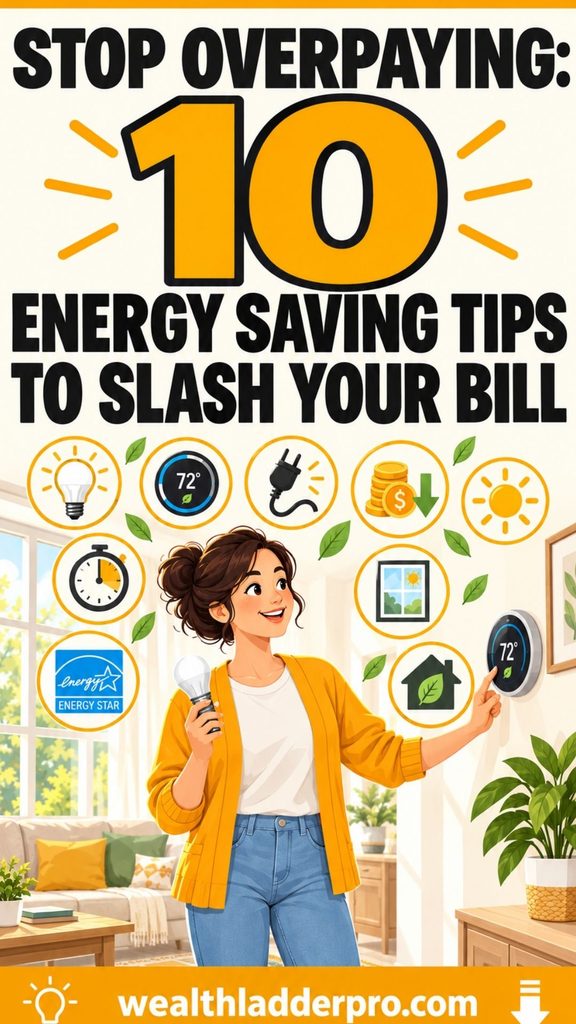
Stop Overpaying: 10 Energy Saving Tips to Slash Your Bill
To lower electricity bills, start with a home energy audit to find where you’re wasting energy, then tackle high-impact fixes like adjusting your thermostat, sealing air leaks, switching to LED lighting, and eliminating phantom power drain.
Combine these habits with longer-term investments like ENERGY STAR appliances and solar panels for the biggest, most lasting savings.
Electricity rates keep climbing, and the numbers back up what your monthly bill is already telling you.
The average U.S. residential electricity rate reached 18.34¢/kWh as of September 2026, up 5.0% year-over-year (ElectricChoice.com, 2026).
Rates have risen 23% since 2022 alone, tacking on roughly $440 a year to the average household’s electric bill.
If you’re searching for ways to reduce electric costs without sacrificing comfort, you’re far from alone.
Here’s some good news: you don’t need to overhaul your entire home to see meaningful savings.
Heating and cooling alone account for up to 50% of a typical household’s energy usage,
which means even small adjustments in this area can move the needle on your bill.
Add in a handful of quick, low-cost habit changes, and the savings start to compound quickly.
This post breaks down 10 practical energy saving tips, ranging from five-minute fixes like unplugging idle electronics to longer-term investments like solar panels.
Whether you’re trying to cut energy costs this month or build habits that pay off for years, these tips will help you lower electricity bills and keep more money in your pocket.
1. What is a home energy audit, and why should you start there?
A home energy audit is a professional or DIY assessment that identifies exactly where your home is wasting energy, whether that’s through air leaks, poor insulation, or inefficient HVAC equipment.
It’s the logical first step before making any other changes, because it tells you where your money is actually going.
According to PearlScore (2026), a standard professional audit costs around $437, and homeowners typically save $685 per year by implementing the recommendations.
That means the investment pays for itself in about seven months, with savings continuing to compound after that.
Air leakage shows up in roughly 90% of homes audited, so there’s a good chance your house has at least one easy fix waiting to be found.
Many utility companies, including Georgia Power, offer free in-home energy audits with personalized recommendations.
If a professional audit isn’t in the budget right now, you can still do a basic DIY version: check for drafts around windows and doors, inspect visible insulation in your attic or basement, and review a few months of utility bills to spot unusual spikes in usage.
2. How much can switching to LED lighting actually save you?
Lighting accounts for about 5% of average household energy use, which might not sound like much, but the fix is so simple that it’s hard to justify skipping it.
ENERGY STAR-certified LED bulbs last at least 25 times longer and use up to 90% less electricity than traditional incandescent bulbs.
For the fastest payback, start with the fixtures you use most often, think kitchen lighting, living room lamps, and outdoor fixtures that stay on for hours each day.
Since LEDs last so much longer, you’ll also spend less time and money replacing bulbs, which adds a layer of convenience savings on top of the energy savings.
3. What’s the fastest way to save on heating and cooling costs?
Heating and cooling combined make up roughly 35% of household energy use, with air conditioning responsible for about 19% and space heating around 16%. That makes your thermostat one of the highest-leverage tools in your home.
Every degree you adjust your thermostat (up in summer, down in winter) can save 3-5% off your monthly bill.
A programmable or smart thermostat takes the guesswork out of this by automatically adjusting the temperature based on your schedule or whether anyone’s home.
Set it once, and you’ll keep saving without having to think about it again.
Also Read: How to Make Money On Snapchat: 10 Proven Ways to Earn Real Income
4. What is phantom power, and how much is it costing you?
Phantom power, also called standby power, is the electricity your devices draw even when they’re switched off or sitting idle.
Think chargers left plugged in, gaming consoles in standby mode, or a coffee maker with a always-on display clock.
Lawrence Berkeley National Laboratory estimates idle loads can account for up to 10% of a typical household’s electric bill.
According to the U.S. Department of Energy, these always-on devices can cost the average household up to $100 a year.
The fix costs nothing: unplug electronics you’re not using, or invest in a smart power strip that cuts power to multiple devices with a single switch.
LBNL research also found that taking a proactive approach to standby power can reduce this drain by about 20%.
5. Does running full loads in your dishwasher and washing machine really matter?
Yes. Running a partial load uses close to the same amount of water and electricity as a full one, so you’re paying full price for a fraction of the results.
Waiting until you have a full load before running either appliance is one of the easiest habit changes you can make.
A few other quick wins in the laundry room: wash clothes in cold water whenever possible, since heating water accounts for a significant share of a washing machine’s energy use, and clean the lint trap before every dryer cycle to keep air flowing efficiently.
Laundry appliances account for about 5% of household energy use, so these small habits add up meaningfully over a year.
6. Is it worth upgrading to ENERGY STAR certified appliances?
Older refrigerators, washers, and water heaters often consume significantly more electricity than their ENERGY STAR-certified counterparts.
Since water heating is typically the second-largest energy expense in most households, upgrading to a more efficient model can have an outsized impact on your bill.
Before you buy, check whether your utility provider offers rebate programs for qualifying upgrades.
Many do, and stacking a rebate on top of the energy savings can shorten the payback period considerably.
Also Read: Emergency Fund Savings: The Number That Changes Everything
7. How much energy are you losing through windows and doors?
Heat loss or gain through windows can affect a home’s temperature by as much as 25%, which forces your HVAC system to work harder than it should.
Weatherstripping, caulking gaps, and adding window coverings like blinds or curtains are inexpensive ways to cut down on drafts.
It’s also worth looking at your ductwork. Sealing and insulating air ducts can improve heating and cooling efficiency by 20% or more, since leaky ducts often push conditioned air into attics, basements, or crawl spaces instead of your living space.
8. Can ceiling fans really lower your electricity bill?
Ceiling fans reduce your reliance on air conditioning by circulating air more evenly throughout a room, which can let you raise the thermostat a degree or two without losing comfort.
The direction your fan spins matters: run it counterclockwise in summer to create a cooling breeze, and clockwise in winter to push warm air (which naturally rises) back down into the room.
Fans are a low-cost complement to thermostat adjustments, not a replacement for regular HVAC maintenance. Use them together for the best results.
9. Are solar panels a smart long-term investment for lowering electric costs?
Solar panels represent a bigger upfront investment than most tips on this list, but the long-term payoff can be substantial.
In the UK, solar panel owners save upwards of £750-£1,000 per year on their electricity bills, with additional savings available for those who pair panels with battery storage.
The upfront cost is real, and it’s worth acknowledging. But incentives, tax credits, and financing options can offset a significant portion of the investment, often making solar a smart choice for homeowners planning to stay in their homes for several years.
10. How can monitoring your usage help you save more over time?
Most utility providers offer an online portal that breaks down your electricity usage, and smart home energy monitors take this a step further by tracking consumption in real time.
Setting usage alerts helps you catch unexpected spikes early, whether that’s from a malfunctioning appliance or a habit you didn’t realize was costing you.
Monitoring won’t save you money on its own, but it turns one-time fixes into sustained, long-term savings by keeping you aware of how your choices affect your bill month after month.
Also Read: Save Money Low Income: 9 Budget Tips That Actually Work
Start Saving on Your Electricity Bill Today
Lowering your electricity bill doesn’t require choosing between comfort and cost.
Small, consistent changes, switching to LED bulbs, sealing air leaks, unplugging idle electronics, work alongside bigger investments like ENERGY STAR appliances and solar panels to deliver savings that compound over time.
If you’re not sure where to start, a free energy audit is the best first move.
It’ll show you exactly where your home is losing energy and which fixes will have the biggest impact on your specific bill. From there, work through these 10 tips at your own pace, prioritizing the ones with the fastest payback for your situation.
Ready to take the next step? Subscribe to our newsletter for more energy saving tips, or download our free energy-saving checklist to track your progress room by room.
How to Lower Your Utility Bills
Start by identifying where energy is wasted in your home—this could mean sealing drafts around windows or upgrading to energy-efficient LED bulbs.
Unplug devices you’re not using, as even idle electronics draw power. Swap out old appliances for energy-saving models like those with an ENERGY STAR rating.
Be mindful of your daily habits, like turning off lights when leaving a room or running full loads in the dishwasher and washing machine.
Installing a programmable thermostat can also help you avoid heating or cooling empty spaces, keeping your bills in check without constant adjustments. Small changes add up quickly and make a noticeable difference.
How to Lower Your Utility Bills and Save Money
Cutting down on your electricity bills starts with simple, everyday actions that make a big impact.
Switch off lights, fans, and appliances whenever you leave a room, and unplug devices that aren’t in use, as even standby mode wastes energy.
Replace regular bulbs with energy-efficient LEDs, which use less power and last longer.
Choose appliances with high energy efficiency ratings and make sure to clean and maintain them for peak performance.
Adjust your thermostat by a few degrees and use ceiling fans to stay comfortable without overworking your heating or cooling system.
Small choices like these, repeated daily, help lower your costs while reducing energy waste.
How to Reduce Your Electricity Bills
Start by switching off lights and devices when not in use, as even standby mode adds to your bill.
Replace old bulbs with LED options that use less energy and last much longer. Unplug chargers and electronics when they’re fully charged, as they continue to draw power.
Keep appliances like refrigerators clean and serviced so they run efficiently without wasting electricity.
Use natural light during the day and adjust your thermostat slightly, pairing it with ceiling fans to stay comfortable without overloading your heating or cooling system. These small, simple habits can quickly add up to noticeable savings.
how to lower your electric bill in winter
Lowering your electricity bills in winter is simpler than you might think. Start by sealing drafts around windows and doors to keep the warm air in and the cold air out.
Switch to energy-efficient LED bulbs since winter days are shorter and lights stay on longer.
Layer up with cozy clothing and blankets to rely less on the thermostat, and set it a few degrees lower, especially at night.
Use a programmable thermostat to heat your home only when needed, and make sure vents are clear to distribute heat effectively.
If you have a sunny day, open curtains to let natural warmth in, but close them at night to trap the heat. Small changes like these can keep you warm while saving on energy costs.
How to Lower Your Electric Bill in Florida
Living in Florida means dealing with heat, so cutting electricity costs often starts with managing the A/C wisely.
Set your thermostat a bit higher when you’re away, and use ceiling fans to circulate air—you’ll feel cooler without overworking the system.
Block out the sun’s heat by closing blinds or using blackout curtains during the hottest part of the day.
Simple swaps, like LED bulbs and energy-efficient appliances, can also make a big difference.
Don’t forget to clean or replace air filters regularly so your cooling system runs efficiently. Small actions like these save energy and keep bills under control.
Frequently Asked Questions
How can I lower my electricity bill fast?
The fastest results come from zero-cost or low-cost changes: unplug idle electronics to eliminate phantom power drain, adjust your thermostat by a degree or two, switch to cold water for laundry, and run full loads in your dishwasher and washing machine. These changes can start showing up on your very next bill.
What uses the most electricity in a home?
Heating and cooling account for the largest share of household energy use, roughly 35% combined (19% air conditioning, 16% space heating).
Water heating is typically the second-largest expense, followed by lighting, laundry appliances, and phantom power from idle electronics.
Is a home energy audit worth the cost?
Yes, for most homeowners. A standard professional audit costs around $437, and the average household saves $685 per year by implementing the recommendations, meaning the investment pays for itself in about seven months. Many utility companies also offer free audits, which removes the upfront cost entirely.
Are solar panels a good investment for lowering electricity bills?
Solar panels make the most sense for homeowners planning to stay in their home for several years, since the upfront cost is higher than other tips on this list.
UK solar panel owners save upwards of £750-£1,000 per year, and incentives or financing options can help offset the initial investment.
How much can switching to LED bulbs save me?
ENERGY STAR-certified LED bulbs use up to 90% less electricity than incandescent bulbs and last at least 25 times longer.
Since lighting accounts for about 5% of average household energy use, this is one of the lowest-effort, highest-impact changes you can make.