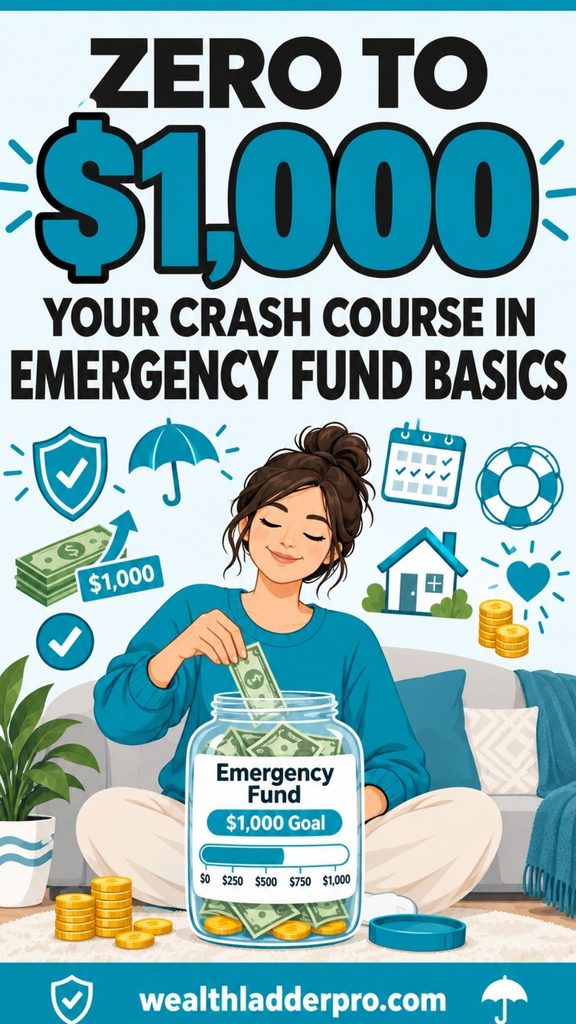
Zero to $1,000: Your Crash Course in Emergency Fund Basics
Building a $1,000 emergency fund fast is achievable by combining three tactics: cutting unnecessary expenses, adding short-term side income, and automating transfers into a high-yield savings account.
Breaking the goal into small weekly milestones—like $25 a week—makes the process feel manageable and keeps motivation high until you hit your target.
Nearly half of all Americans—43%, according to Bankrate—can’t cover a surprise $1,000 expense without turning to credit cards or loans.
If that sounds like your situation, you’re not alone, and you’re certainly not failing at adulting.
You’re simply missing a buffer that a huge portion of the population doesn’t have either.
That’s where emergency fund basics come in. Instead of aiming for the intimidating “3 to 6 months of expenses” goal you’ve probably heard financial experts recommend, this guide focuses on a smaller, more achievable milestone: $1,000.
It’s enough to cover most common emergencies, and reaching it fast builds the habits and confidence you’ll need for bigger savings goals down the road.
This post walks through practical ways to build savings fast, including trimming expenses, picking up short-term side hustles, choosing the right savings account, setting milestones, and automating your progress.
We’ll also cover the roadblocks that trip people up most often, so you can build financial security planning that actually sticks.
Whether you’re living paycheck to paycheck or just haven’t gotten around to building a safety net, $1,000 is a realistic target you can hit in weeks, not years.
What Is an Emergency Fund (and Why It’s Your Financial Lifeline)?
An emergency fund is money set aside specifically for unplanned, essential expenses—think car repairs, a broken water heater, a trip to urgent care, or a sudden layoff.
It is not for vacations, holiday gifts, or a sale on shoes. Its entire purpose is to stand between you and a financial emergency, so you’re not forced into debt when life throws you a curveball.
The scale of this gap is bigger than most people realize. According to FinanceBuzz, 34% of Gen Z has no emergency fund at all, and 37% have less than three months’ worth of expenses saved.
This isn’t a generational failure—it reflects real challenges like stagnant wages, high housing costs, and student debt. It also means that if you’re starting from zero, you’re in the same position as millions of others.
An emergency fund also differs from other savings goals in one key way: purpose. A vacation fund is meant to be spent.
A retirement account is meant to grow untouched for decades. An emergency fund sits in between—accessible enough to use immediately, but reserved strictly for true emergencies.
Why $1,000 Is the Perfect Starter Emergency Fund
Financial experts often recommend saving 3 to 6 months of expenses, but that number can feel so far out of reach that people give up before they start.
A starter emergency fund of $1,000 works better for most people because it’s specific, attainable, and directly tied to the most common financial surprises.
Consider what most emergencies actually cost: a flat tire, a minor ER visit copay, a broken appliance, or an unexpected vet bill.
Most of these fall well within the $1,000 range. Hitting this milestone means you’re covered for the situations most likely to derail your budget in any given year.
Once you’ve built your $1,000 cushion, you have a foundation to build on.
The same strategies that got you here—cutting expenses, adding income, automating savings—will also carry you toward a fuller 3-to-6-month fund over time.
How Can You Slash Your Spending to Free Up Cash Fast?
The fastest way to start saving is to find money you’re already spending without realizing it. Start with a quick expense audit:
- Cancel unused subscriptions. Streaming services, apps, and memberships you forgot about can add up to $50 or more a month.
- Renegotiate recurring bills. Call your internet, phone, or insurance provider and ask about lower rates or promotions—many will offer a discount just for asking.
- Cut back on dining out. Even reducing takeout by two meals a week can free up $40 to $80 monthly.
For a bigger push, try a 30-day spending freeze. Commit to spending only on essentials—groceries, bills, transportation—and redirect everything else into your emergency fund.
It sounds extreme, but even a partial freeze reveals how much “invisible spending” is eating into your budget.
Small daily habits matter too. Skipping a $5 daily coffee run saves $150 a month, or $1,800 a year.
That’s well past your $1,000 target on its own. Apps like Mint, YNAB, or even a basic spreadsheet can help you track exactly where your money goes so you know where to cut.
Also Read: Stop Overpaying: 10 Energy Saving Tips to Slash Your Bill
What Side Hustles Can Help You Build Savings Fast?
Cutting expenses only gets you so far—pairing it with extra income accelerates your timeline significantly.
The good news: you don’t need a second full-time job to make meaningful progress. A few low-barrier options include:
- Freelance writing or proofreading: Rates vary widely, but even beginners can earn $15 to $40 per hour depending on the platform and niche.
- Virtual assistant work: Many virtual assistants earn $20 to $30 an hour helping small businesses with admin tasks, scheduling, or customer service.
- Pet sitting or dog walking: Apps like Rover connect sitters with local clients, with typical earnings of $15 to $25 per walk or visit.
- Selling unused items: Clothes, electronics, and furniture sitting unused in your home can be sold on Facebook Marketplace, Poshmark, or eBay for quick cash.
Even a few hours a week can move the needle. At $20 an hour, just five hours a week of side work adds $100 weekly—putting you at $1,000 in ten weeks, even before accounting for expense cuts.
Where Should You Keep Your Emergency Fund for Maximum Growth?
Once you’re saving, where that money sits matters. A high-yield savings account (HYSA) is a type of savings account, typically offered by online banks, that pays a significantly higher interest rate than a standard savings account.
As of 2026, top HYSAs offer rates around 4.10% to 4.20% APY, compared to the roughly 0.01% APY offered by many traditional brick-and-mortar banks.
That difference matters for financial security planning. While $1,000 won’t generate huge returns in the short term, keeping your emergency fund in a HYSA means your money grows passively while remaining fully liquid and accessible whenever you need it.
Choose a HYSA if you want your emergency fund to earn meaningful interest without sacrificing access—this makes it a better home for emergency savings than a checking account or a long-term investment account, which may involve withdrawal penalties or market risk.
When comparing accounts, look at online banks first. They typically offer higher rates than legacy banks because they have lower overhead costs, and most come with no monthly fees or minimum balance requirements.
How Do You Break $1,000 Into Achievable Savings Milestones?
Staring down a $1,000 goal can feel abstract. Breaking it into smaller milestones makes it concrete and far less overwhelming.
Try one of these approaches:
- $100 a month for 10 months: Ideal if your income is steady and predictable.
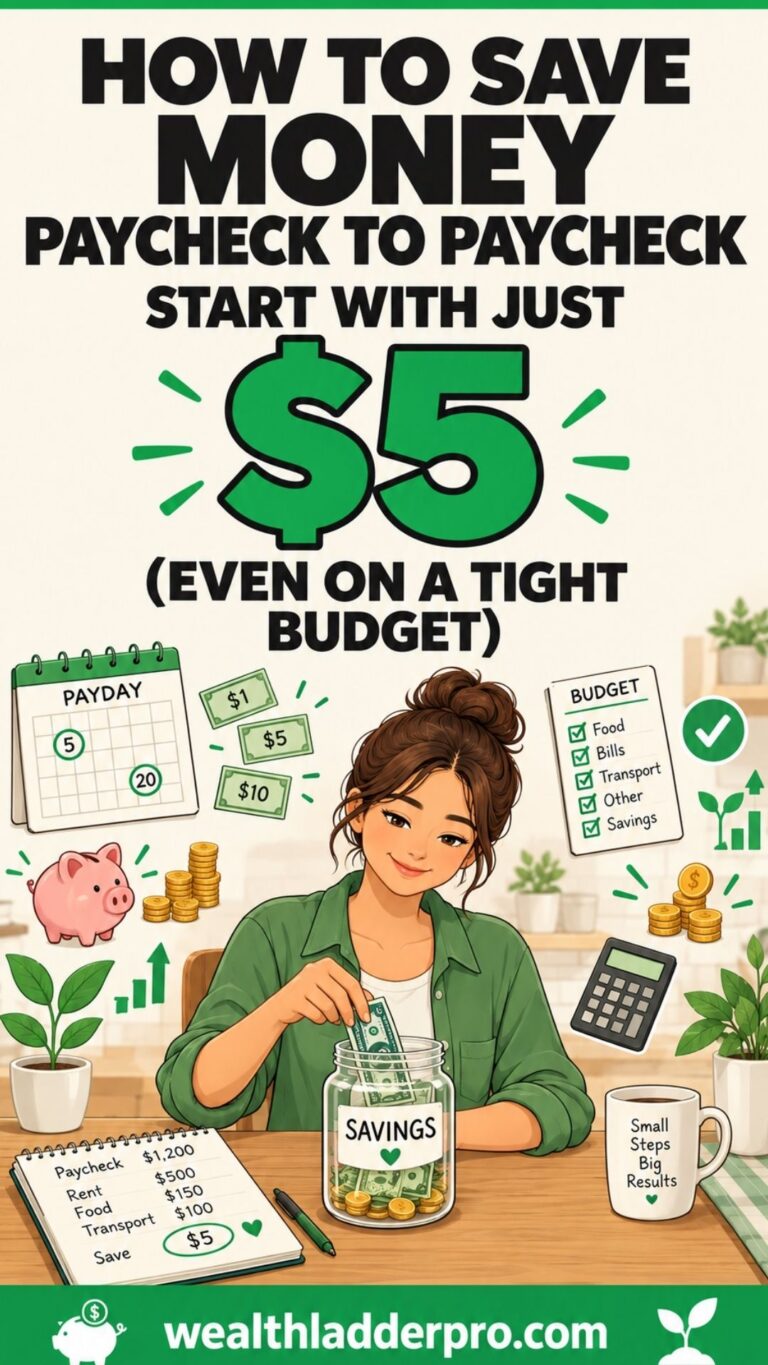
- $25 a week: A helpful frame if you get paid weekly or biweekly and want to build the savings habit in small increments.
- $34 a week for roughly 30 weeks: A slightly faster pace for those wanting to hit the goal within about seven months.
Whichever pace you choose, track your progress visually. A printable savings tracker, a simple spreadsheet, or a savings app with visual progress bars can keep motivation high.
Watching a bar fill up—or crossing off boxes on a printable tracker—creates a sense of momentum that pushes you toward the finish line faster than an abstract number ever could.
Also Read: Stop Bleeding Money: 8 Ways to Slash Your Monthly Bills
Why Does Automating Your Savings Make Such a Big Difference?
Willpower is unreliable. Automation isn’t. Setting up a recurring transfer from checking to savings right after payday removes the temptation to spend that money before you get the chance to save it.
Most banking apps now offer built-in tools that make this nearly effortless:
- Automatic transfers: Schedule a fixed amount to move into your HYSA on payday.
- Round-up features: Apps like Chime or Acorns round up debit purchases to the nearest dollar and funnel the difference into savings.
- Split-deposit options: Some employers allow you to route a portion of your paycheck directly into a separate savings account.
The key principle: save first, spend what’s left. When saving happens automatically, it stops competing with everyday spending decisions.
What Are the Biggest Obstacles to Building an Emergency Fund, and How Can You Overcome Them?
Even with the best plan, a few common roadblocks tend to derail progress:
The temptation to dip into savings for non-emergencies. Set a clear, written rule for what counts as a true emergency before you start saving.
If a “want” doesn’t fit that definition, it doesn’t qualify for withdrawal.
Irregular income for freelancers or gig workers. If your income fluctuates, save a percentage of each payment rather than a fixed amount.
During higher-earning months, build a buffer to cover slower ones.
Setbacks and slip-ups. Life happens. If you dip into your fund or miss a savings goal, restart without guilt.
One missed month doesn’t erase your progress—it’s just a pause, not a failure.
You Hit $1,000 — Now What?
Reaching $1,000 in savings is a real financial milestone, not a consolation prize.
You’ve built a habit of cutting unnecessary spending, found ways to bring in extra income, chosen a high-yield savings account that grows your money passively, and automated your progress so saving happens without relying on willpower alone.
That habit-building matters more than the dollar amount itself. The systems you just built—expense audits, side income, automated transfers, milestone tracking—are exactly what you’ll use to grow your fund from $1,000 toward a fuller 3-to-6-month cushion.
Take a moment to acknowledge the win, then set your next target. Download a savings tracker, revisit your budget for new areas to trim, and keep that automated transfer running. The hardest part—starting—is already behind you.
Also Read: The 52-Week Saving Challenge: A Simple Path to $1,378
How to Build an Emergency Fund Fast With No Money
Building a $1,000 emergency fund quickly, even with limited money, starts with taking small but consistent actions.
Begin by reviewing your current expenses to identify anything you can cut temporarily—things like subscriptions or dining out.
Sell items you no longer use, such as gadgets or clothes, to generate quick cash.
Look for simple ways to earn extra income, like picking up freelance gigs or participating in local tasks.
Redirect small savings, from skipped coffee runs or lowered utility bills, directly into your fund.
Set up automatic transfers, even for small amounts, so you’re saving without thinking.
The key is staying focused and creative, knowing every little effort gets you closer to that first milestone.
How to Build an Emergency Fund From Scratch
Building a $1,000 emergency fund quickly starts with clear action steps.
Start by cutting back on non-essential expenses, like dining out or streaming subscriptions, and shift that money into your savings.
Look around your home for items you no longer use and sell them online or locally to add a quick boost.
Consider taking on temporary side work, such as freelancing, delivering, or odd jobs in your spare time.
Automate your savings by setting up small, regular transfers into your fund, even if it’s just a few dollars at a time—it all adds up faster than you think.
Stay focused by setting small, achievable goals, and remember, every effort builds momentum toward that $1,000 milestone.
How to Build an Emergency Fund Quickly
Start by evaluating your current expenses and cutting back on non-essentials like streaming subscriptions or dining out; every dollar saved gets you closer to your goal.
Sell unused items around your home for quick cash, whether through local marketplaces or online platforms.
Look into side gigs like freelancing, delivering groceries, or completing small tasks in your spare time to bring in extra income.
Automate savings by directing a small, consistent amount from each paycheck straight into your fund—it builds up faster than you expect.
Stay motivated with clear, small goals, and celebrate milestones to keep your momentum strong.
Frequently Asked Questions
How long does it take to save $1,000 for an emergency fund?
The timeline depends on your income and expenses, but most people can reach $1,000 in two to six months by combining expense cuts with a side hustle.
Saving $25 to $35 a week typically gets you there within roughly seven to ten months, while adding extra income from freelance work or selling unused items can cut that time significantly.
Where should I keep my emergency fund?
A high-yield savings account (HYSA) is the best option for most people.
It keeps your money accessible for true emergencies while earning meaningfully more interest than a standard savings account, with rates around 4.10% to 4.20% APY as of 2026.
Is $1,000 enough for an emergency fund?
A $1,000 starter emergency fund is enough to cover most common financial surprises, like car repairs, minor medical bills, or appliance replacements.
It’s meant as a first milestone, not a final goal—once you reach it, the same strategies can help you build toward a full 3-to-6-month cushion.
What if I have irregular income and can’t save a fixed amount each month?
Save a percentage of each paycheck instead of a fixed dollar amount. This approach scales naturally with fluctuating income, and building a buffer during higher-earning months helps smooth out slower periods.
What’s the fastest way to build an emergency fund?
Combining three tactics works fastest: cutting non-essential spending, adding short-term side income like freelance work or pet sitting, and automating transfers into a HYSA immediately after each paycheck.
Together, these approaches typically build a $1,000 fund faster than relying on any single strategy alone.