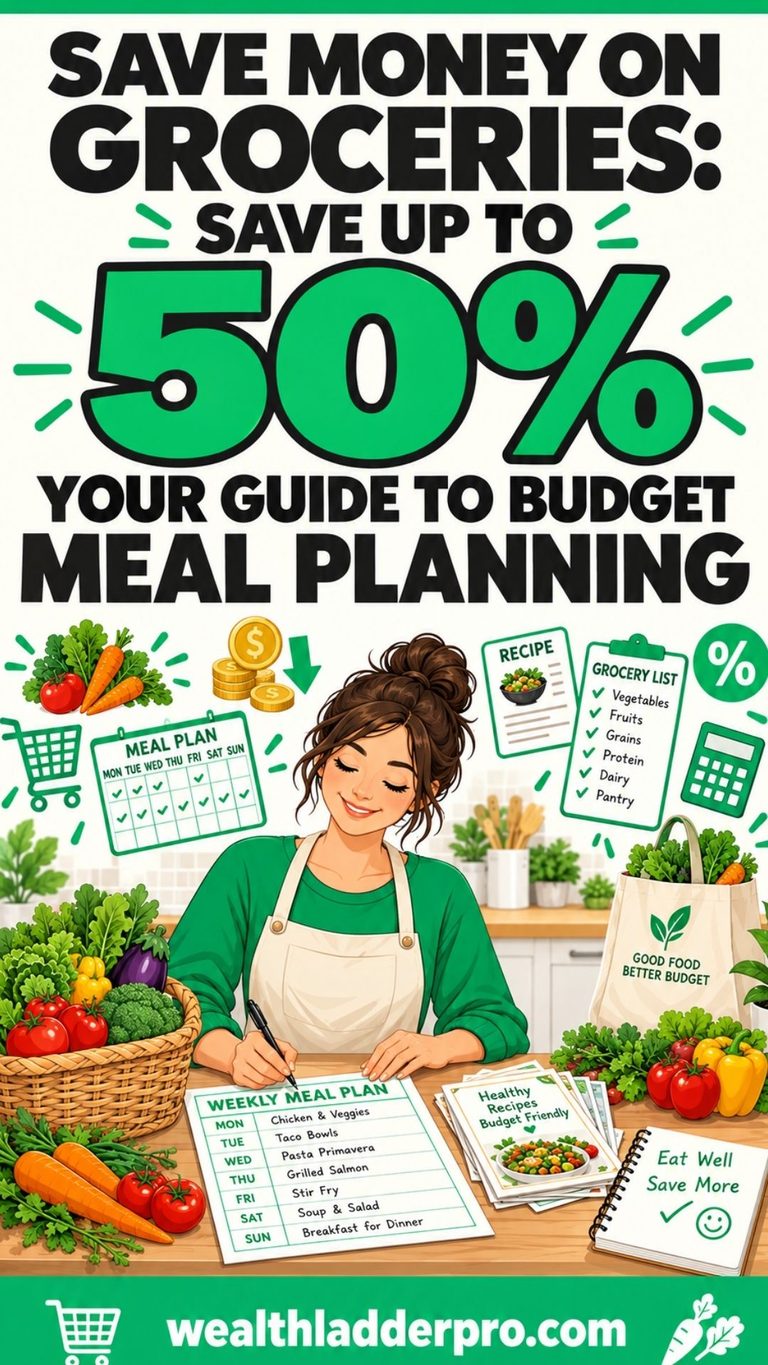
Grocery Bill Giving You Sticker Shock? Save Big Without Eating Less
You can save money on groceries without cutting portions by combining smarter shopping habits—meal planning, store brands, price-per-unit comparisons, and reduced food waste.
These budget grocery shopping strategies can lower your bill by hundreds of dollars a month while keeping your fridge just as full.
The average American now spends around $235 a week—more than $900 a month—on groceries, and food-at-home prices have climbed 2.3% year-over-year. Some staples have jumped even higher: egg prices are up 27%, and beef prices have risen 10.6%.
If your grocery receipts have been giving you sticker shock lately, you’re not imagining it.
The good news is that cutting your grocery bill doesn’t mean cutting your meals. Reducing food costs is less about eating less and more about spending smarter on the same groceries you already buy.
A few tweaks to how you shop, plan, and store food can add up to significant monthly savings, without a single meal feeling smaller.
This guide covers ten practical, actionable strategies for budget grocery shopping, from meal planning and store brands to price comparisons and zero-waste kitchen habits.
Pick a few that fit your lifestyle, and watch your grocery bill shrink while your pantry stays full.

Why Does Meal Planning Save So Much Money on Groceries?
Meal planning is one of the most effective ways to reduce food costs because it eliminates the guesswork that leads to impulse purchases. When you shop without a plan, it’s easy to grab items that sound good in the moment but end up forgotten in the back of the fridge.
Building a grocery list around a week’s worth of planned meals keeps your cart focused and your spending predictable. Before you shop, map out breakfasts, lunches, and dinners for the week, then write your list based on exactly what those meals require. Once you’re in the store, stick to the list.
Apps like Mealime and Paprika can simplify this process by generating shopping lists straight from your chosen recipes. Both are useful for anyone who wants the savings of meal planning without the extra mental load of doing it manually every week.
Can Switching to Store Brands Really Cut Your Grocery Bill?
Store brands are one of the simplest ways to reduce food costs, and the savings are larger than most shoppers expect. Choosing generic or store-brand products over name brands can save up to 30% on your total bill.
Many store brands are manufactured in the same facilities as their name-brand counterparts, using similar (sometimes identical) ingredients and formulas. The packaging looks different, but what’s inside is often nearly indistinguishable.
If you’re hesitant to switch everything at once, start with pantry staples like flour, canned goods, and spices. These items have the least variation between brands, making them a low-risk way to test the switch before applying it to items where taste matters more to you.
What’s the Best Way to Use Coupons and Cashback Apps?
Stacking manufacturer coupons with store loyalty programs is a straightforward way to lower your grocery bill over time. Individually, these savings might feel small. Combined and repeated every shopping trip, they add up fast.
Cashback apps like Ibotta and Rakuten offer an extra layer of savings on routine purchases you’re already making. Many grocery store apps also generate personalized digital coupons based on your shopping history, so it’s worth checking the app before every trip rather than relying on printed coupons alone.
Also Read: Make Money on Reddit: 6 Proven Ways to Turn Karma Into Cash
Does Buying Seasonal Produce Actually Save Money?
Seasonal produce tends to be cheaper and fresher because it doesn’t require the costly transportation and storage that off-season produce demands. When a fruit or vegetable is in peak season locally, supply is high and prices drop accordingly.
Berries are typically cheapest in summer, squash and root vegetables in fall, and citrus in winter. Planning meals around what’s currently in season is a simple form of budget grocery shopping that pays off at checkout.
Farmers markets are also worth checking. Seasonal produce there can be priced competitively with (or even below) grocery store prices, especially toward the end of a market day.
Is Buying in Bulk Actually Cheaper?
Buying non-perishables like rice, pasta, and canned goods in bulk lowers the per-unit cost, making it one of the more reliable ways to reduce food costs over time. But bulk buying only saves money if the math works in your favor.
Before buying a bulk quantity of anything, ask two questions: Do I have room to store it? Will I use it before it expires? Bulk-buying a product you won’t finish isn’t a discount. It’s food waste with extra steps.
If bulk buying is already a regular habit, warehouse clubs like Costco or Sam’s Club can extend the savings further, particularly on household staples you go through consistently.
How Do You Compare Grocery Prices the Right Way?
Comparing the price per ounce, pound, or unit—not just the sticker price—is the most reliable way to identify genuine savings. Larger packaging isn’t automatically cheaper per unit, even though it often looks that way on the shelf.
Most stores post the unit price on the shelf tag directly below the item price. Checking that number before comparing two sizes or brands takes a few extra seconds and can meaningfully change what ends up in your cart.
Price comparison apps and store websites make it easier to compare deals across retailers before you even leave the house, which is especially useful when a specific item’s price varies widely between stores in your area.
Also Read: How to Make Money On Snapchat: 10 Proven Ways to Earn Real Income
How Can You Time Your Shopping Around Sales?
Tracking weekly sales flyers or apps like Flipp helps you identify the best time to buy staples, rather than buying them the moment you run out. When a staple you use regularly goes on sale, that’s the signal to stock up.
Stocking up on non-perishable staples when prices hit their lowest point is a simple form of budget grocery shopping that requires no special skills, just a bit of attention to sale cycles.
For maximum savings, pair sales with coupons. “Stacking” a sale price with a manufacturer coupon or cashback offer often produces the deepest discount available on an item.
Should You Cut Back on Meat to Save Money?
Meat, and beef in particular, has become one of the priciest parts of the average grocery bill, especially with beef prices up 10.6%. Swapping even a few meals a week for plant-based proteins like beans, lentils, and eggs can meaningfully lower your total spend.
Vegetarian households save an average of $130 a month compared to those eating unrestricted diets. That doesn’t mean a full lifestyle change is required to see savings. Replacing meat in two or three meals a week still captures a portion of that benefit, without asking anyone to give up their favorite dishes entirely.
Why Does Cooking at Home Save More Than You Think?
Eating out or ordering takeout costs significantly more per meal than cooking at home, even when you factor in the cost of ingredients. The markup on restaurant meals covers labor, overhead, and convenience, all of which disappear when you cook yourself.
Batch cooking on weekends is one of the most efficient ways to keep home-cooked meals realistic during a busy week. Preparing a few large dishes in advance means dinner is already handled on the nights you have the least time or energy to cook.
Leftovers stretch further than most people give them credit for. Roast chicken can become soup, tacos, or a grain bowl the next day. Treating leftovers as an ingredient rather than a repeat meal keeps your food budget working harder.
Also Read: From Prompts to Profits: How to Make Money With AI Today
How Much Money Does Food Waste Actually Cost You?
Food waste is one of the most overlooked costs in any grocery budget. Wasted produce, forgotten leftovers, and expired pantry items all quietly drain money that never shows up as a single line item on a receipt.
Proper storage extends the life of food you’ve already paid for. Keeping fresh herbs in a glass of water, freezing extras before they turn, and storing produce correctly can add days or weeks to an item’s usable life.
Before writing a new grocery list, take stock of what’s already in your fridge and pantry. Planning meals around what you already own reduces both waste and unnecessary purchases, tightening your budget grocery shopping habits from both directions.
Smarter Shopping Starts Today
Saving money on groceries doesn’t require eating less. It requires shopping and cooking with a bit more intention. Meal planning, store brands, seasonal produce, and smarter protein choices all chip away at your bill without shrinking a single portion.
Trying to adopt all ten strategies at once can feel overwhelming, and it isn’t necessary. Start with one or two that fit naturally into your routine, like building a weekly meal plan or switching a few pantry staples to store brands. Once those become habits, add another strategy, and let the savings compound over time.
Ready to put this into practice? Download our free budget grocery shopping checklist to keep these strategies handy on your next trip to the store.
How to Save Money on Groceries While Eating Healthy
Focus on smart choices instead of cutting portions. Plan meals around seasonal produce, which is often cheaper and fresher. Try buying in bulk for staples like rice or oats and look for discounts on frozen fruits and vegetables—they last longer and are just as nutritious. Cooking at home more often saves money and lets you control ingredients for healthier meals. Swap costly pre-packaged snacks for homemade versions, and explore local farmers’ markets for deals. Small changes like these can help you stretch your budget without sacrificing health or flavor.
How to Save Money on Food While Eating Healthy
Focus on smarter choices instead of eating less to save money on groceries. Plan meals around affordable, versatile ingredients like beans, lentils, and whole grains. Buy fresh produce that’s in season or shop for frozen options, which are budget-friendly and just as healthy. Stick to a list when you shop to avoid impulse buys, and try store-brand products—they often cost less but deliver the same quality. Cooking in larger batches can also stretch your budget, giving you leftovers for lunch or dinner. These small steps add up to big savings without compromising on the food you enjoy.
How to Spend Less on Groceries
Saving money on groceries starts with planning smarter, not eating less. Begin by making a weekly meal plan using ingredients you already have, then create a focused shopping list to cut down on unnecessary purchases. Choose versatile items like beans, rice, or pasta that work in multiple meals, and compare prices on store-brand products that often match name brands in quality. Look for discounts or bulk deals on foods you frequently use, and consider freezing extras to avoid waste. Cooking at home more often and repurposing leftovers into new meals can stretch ingredients further, keeping costs low while still enjoying nutritious, satisfying food.
easy ways to save money on groceries
Start by planning your meals for the week, focusing on recipes that use similar ingredients to avoid buying too much. Stick to a shopping list to prevent impulse buys, and check your pantry first to see what you already have. Shop seasonal produce, as it’s often cheaper and fresher, and don’t overlook frozen fruits and veggies for affordable, long-lasting options. Buying in bulk for staples like grains or canned goods saves money long-term, while using coupons or loyalty programs can cut costs instantly. Cooking larger portions and freezing extras reduces waste and provides quick meals, keeping your budget in check without sacrificing variety or nutrition.
Frequently Asked Questions
How can I save money on groceries for a family of four?
Focus on strategies that scale with volume: buying non-perishables in bulk, batch cooking on weekends, and switching to store brands across high-use items like milk, bread, and pantry staples. Meal planning also has a bigger impact for larger households since it prevents the duplicate or forgotten purchases that are more common with more people shopping.
What’s the best way to reduce food costs without using coupons?
Meal planning, store brands, and reducing food waste are the three most effective strategies that don’t rely on coupons. Together, they address the biggest sources of grocery overspending: impulse buys, brand markup, and food that goes bad before it’s used.
Do store brands taste as good as name brands?
Quality varies by category, but many store brands are manufactured in the same facilities as name brands using similar formulas. Pantry staples like flour, canned goods, and spices tend to have the least noticeable difference, making them a low-risk starting point for testing store brands.
How much can meal planning actually save on groceries?
Meal planning primarily saves money by preventing impulse purchases and reducing food waste from unused ingredients. While the exact amount varies by household, shoppers who plan meals and shop with a list consistently spend less than those who shop without a plan.
Is cutting out meat necessary to save money on groceries?
No. Vegetarian households save an average of $130 a month compared to those eating unrestricted diets, but you don’t need to eliminate meat entirely to see savings. Replacing meat in even two or three meals a week with beans, lentils, or eggs captures meaningful savings without a full dietary overhaul.